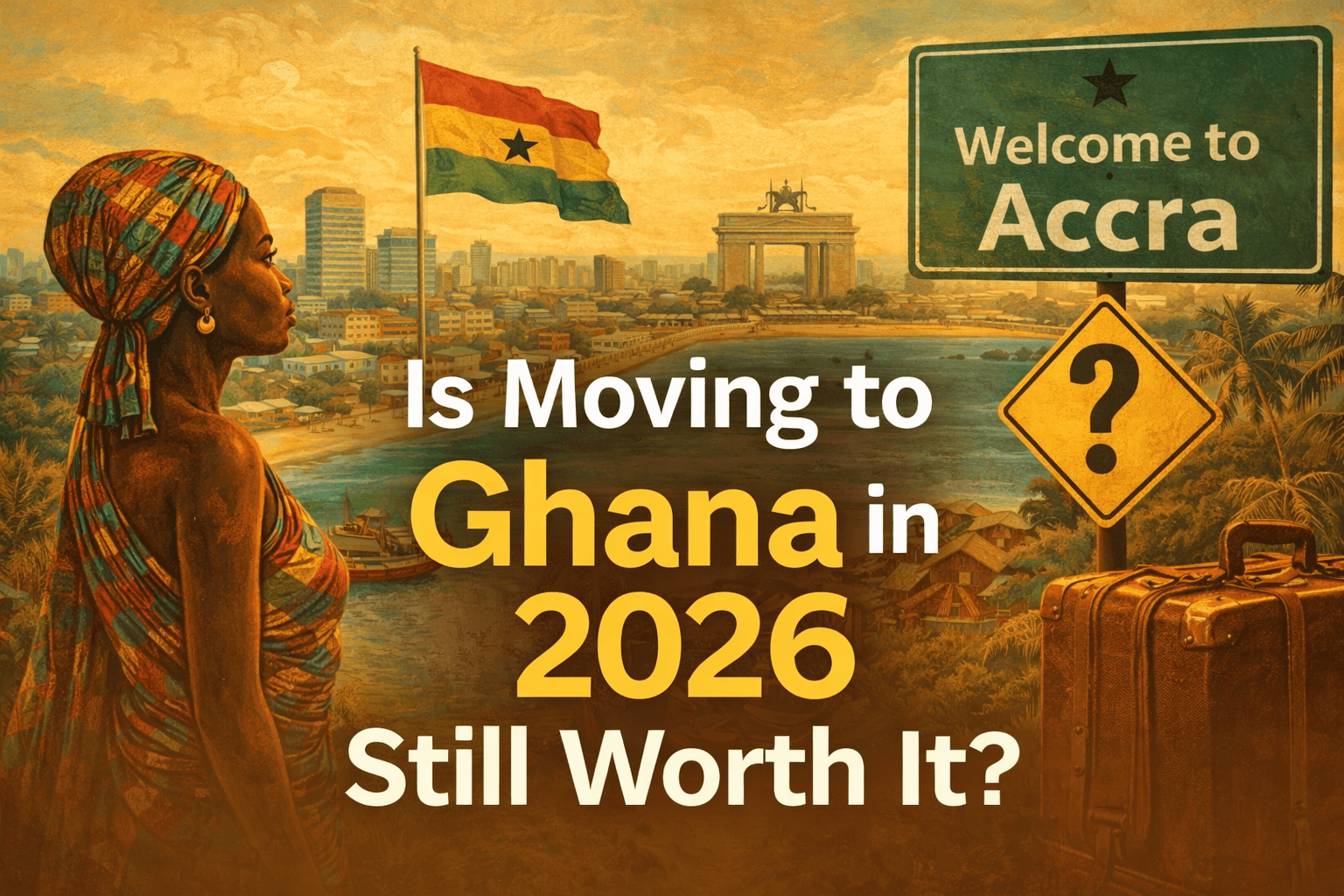
Is Moving to Ghana in 2026 Still Worth It?
An honest guide to moving to Ghana in 2026: costs, pros and cons, and whether it's still worth it for you.
The Year of Return was 2019. Beyond the Return was 2020. We're now in 2026, and the diaspora wave that surged into Ghana has had time to settle, test the waters, and face reality. So let's ask the question nobody seems to be asking anymore: Is moving to Ghana still worth it?
The short answer: It depends on what you're looking for and how realistic you are about what you'll find.
The Landscape Has Changed
When the Year of Return kicked off, Ghana felt like the promised land. Social media was flooded with videos of sunny beaches, buzzing nightlife, and diasporans proclaiming they'd "found home." Fast forward to today, and the narrative is more nuanced.
Some people are thriving. Others quietly moved back. And a growing number are stuck somewhere in the middle neither fully settled nor ready to leave.
Here's what's actually happening on the ground.
The Good: What Still Makes Ghana Attractive
1. The Warmth Is Real
Ghanaians are genuinely welcoming. Whether you're African American, Caribbean, or from elsewhere in the diaspora, there's a cultural openness that's hard to find in many Western countries. You're not constantly explaining yourself or your presence. You just... exist. And that's refreshing.
2. Cost of Living (If You Know How to Live)
This is where people get it twisted. Ghana can be affordable or it can bleed you dry. It all depends on your lifestyle choices.
Affordable living:
- Local food markets: Fresh produce for a fraction of what you'd pay abroad
- Public transport (trotros): Cheap and everywhere
- Local neighborhoods: Rent in places like Dansoman, Lapaz, or Madina is manageable if you know the market
- Street food: Waakye, banku, kenkey delicious and budget friendly
Expensive living:
- Expat neighborhoods: East Legon, Airport Residential, Cantonments, theres are areas where rent rivals or sometimes even exceeds Western cities
- Imported goods: Everything from cereal to toiletries costs 2-3x more
- Dining out at Western style restaurants: Expect to pay $15-30 per meal
- International schools: $10,000-$25,000 per year per child
If you're willing to live like a local, your money stretches. If you need Western comforts, prepare to pay Western (or higher) prices.
3. Business Opportunities Are Real
Ghana's economy is growing, and there are genuine gaps in the market. From tech to hospitality, creative services to logistics, there's room to build something. The government has rolled out initiatives to attract diaspora investment, and bureaucratic processes while still slow, they have improved.
But don't show up thinking you'll "save Africa" with some half-baked idea. Ghanaians are savvy, educated, and entrepreneurial. Your competition is fierce, and respect for local knowledge is non-negotiable.
4. The Weather
Let's be honest: no snow, no harsh winters, no seasonal depression. The warmth alone is a quality-of-life upgrade for many people. Just be ready for the heat, humidity, and occasional power outages.
The Tough: What People Don't Talk About Enough
1. Infrastructure Is a Daily Battle
Electricity cuts (dumsor) have improved, but they're not gone. Internet can be spotty. Roads flood during rainy season. Traffic in Accra is brutal. What should be a 20-minute drive can easily become 90 minutes.
These aren't dealbreakers, but they're daily realities that chip away at your patience. If you're used to things "just working," prepare for an adjustment period. We go deeper into what nobody tells you about moving to Ghana in a separate post.
2. Cost of Living (Yes, Again)
Here's the paradox: Ghana can be cheap or expensive, but it's rarely efficient. You'll spend money on things you never budgeted for:
- Backup generator or solar panels because of power cuts
- Water storage because supply isn't consistent
- Private healthcare because public facilities are overwhelmed
- Extra transport costs because of traffic and unreliable public transport timing
- Import duties on goods you can't find locally
These hidden costs add up fast.
3. Bureaucracy and Red Tape
Getting anything official done, from registering a business to renewing a visa, can be exhausting. Processes that should take days stretch into weeks or months. You'll hear "come back tomorrow" more times than you can count.
Patience isn't optional here. It's survival. For official requirements and current timelines, check the Ghana Immigration Service or Ghana Investment Promotion Centre (GIPC) for the latest rules.
4. The Culture Shock Is Real (Even for Diasporans)
You might look like everyone else, but cultural gaps will show up. Language (if you don't speak Twi, Ga, or other local languages), social norms, gender dynamics, family expectations. It's all different.
And yes, as a diasporan, you'll sometimes be seen as an outsider. The "obroni" label gets thrown around, even if you're Black. It's not always malicious, but it's a reminder that "coming home" is more complicated than it sounds.
5. Job Market Realities
Unless you're working remotely for a foreign company, finding well-paying work in Ghana is tough. Local salaries often don't match the cost of living in expat-heavy areas. Entrepreneurship is the path most diasporans take, but that comes with its own risks and challenges.
The Money Talk: What Does It Actually Cost?
Let's break it down with real numbers (as of 2026):
Monthly Budget (Single Person, Moderate Lifestyle):
- Rent (1-bedroom in mid-tier area): $400-800 (see our rent in Accra guide for area-by-area breakdowns)
- Utilities (electricity, water, internet): $80-150
- Food (mix of local and some imported): $250-400
- Transport (mix of Uber/Bolt and trotro): $100-200
- Entertainment/social: $100-200
- Miscellaneous: $150
Total: $1,080 - $1,900/month
Monthly Budget (Family of 4, Comfortable Lifestyle):
- Rent (3-bedroom in expat area): $1,500-3,000
- Utilities: $200-350
- Food: $600-900
- International school (2 kids): $1,700-4,200
- Transport: $300-500
- Healthcare: $200-400
- Entertainment: $200-400
Total: $4,700 - $9,750/month
These numbers assume you're not living extravagantly, but also not struggling. Your mileage will vary.
Is Moving to Ghana in 2026 Worth It?
Here's the framework I'd suggest:
Move to Ghana if:
- You have remote income or solid business capital
- You're willing to adapt and live somewhere between "local" and "expat"
- You value cultural connection and community over convenience
- You have realistic expectations and patience for systems that don't always work smoothly
- You're ready to invest time in building genuine relationships and understanding local dynamics
Don't move to Ghana if:
- You expect Western infrastructure and efficiency
- You need everything to be familiar and comfortable
- You're not willing to deal with bureaucracy and occasional chaos
- You're broke and hoping Ghana will be a cheap escape (it won't be)
- You're running from problems instead of running toward something
The Bottom Line
Ghana in 2026 isn't the fantasy that social media sold in 2019. But it's also not the disaster that some critics claim. It's a real place with real opportunities and real challenges.
The diasporans who are happiest here are the ones who came with eyes wide open, stayed flexible, and built lives rooted in reality, not hype.
Moving to Ghana in 2026 can absolutely be worth it. But worth it for you? That depends on whether you're ready for the full picture, not just the highlight reel.
For more on day-to-day realities before you commit, read What Nobody Tells You About Moving to Ghana. For Accra rent and neighbourhoods, see our Rent in Accra guide.
What's your experience? Are you thinking about making the move, or have you already taken the leap? Drop your thoughts. We're building a community of real talk, not sugar-coating.
SEO (for editors)
- Meta title: Is Moving to Ghana in 2026 Still Worth It? (47 chars)
- Meta description: (use frontmatter description above; 155 char max)
- URL slug: moving-to-ghana-2026
- Excerpt: The Year of Return is behind us. Here's an honest look at what moving to Ghana in 2026 really costs and whether it's still worth it.
- Tags: moving to Ghana 2026, relocating to Ghana, Accra cost of living, Ghana expat, Year of Return
- Image alt: Person overlooking Accra skyline, with text about whether moving to Ghana in 2026 is still worth it.
Get More Honest Insights
Weekly stories and practical advice about life in Ghana, delivered to your inbox.
Subscribe to Newsletter