What Nobody Tells You About Moving to Ghana
What nobody tells you about relocating to Ghana: bureaucracy, power cuts, cultural gaps, and what you only learn after you land.

Moving to Ghana is a big decision. Social media and “Year of Return” stories often highlight the highs: the warmth, the culture, the sense of belonging. But there’s a lot that nobody tells you until you’re already here. This post is about those things: the bureaucracy, the daily realities, and the small print that can make or break your experience when relocating to Ghana.
1. “Come Back Tomorrow” Is a Real Strategy
Bureaucracy in Ghana runs on its own clock. Whether you’re registering a business, renewing a visa, or getting a document stamped, “come back tomorrow” (or next week) is a standard response. If you’re still weighing the move, our honest take on moving to Ghana in 2026 covers costs and whether it’s still worth it. It’s rarely personal. It’s how the system often works. Patience and a local contact or agent can save you months of back-and-forth. Plan for processes to take 2–3x longer than you’d expect in the West.
2. Power and Water Aren’t Guaranteed
Dumsor (power cuts) has improved, but in many areas you still can’t assume 24/7 electricity or water. Expensive neighborhoods often have compound generators and water tanks; in mid-range or budget areas, you might be on your own. Factor in the cost of a generator, inverter, or solar if you need reliable power for work. Water storage (tanks, buckets) is normal. Nobody tells you how much mental energy “will the lights stay on?” can take until you’ve lived it.
3. You’ll Be “Obroni” (Or the Equivalent) Even If You’re Black
Diasporans sometimes expect to blend in. In practice, you’ll often be marked as “from abroad" by accent, dress, or simply the way you move through space. “Obroni” (foreigner) or similar labels get used for any non-local, including Black diasporans. It’s not always negative, but it can feel jarring when you’ve come “home.” Understanding that “coming home” is complex, legally, culturally, and emotionally, helps. Building real relationships takes time and humility.
4. The Cost of Living Has Two Tiers
Ghana can be cheap or expensive depending on how you live. Eat local, use trotros, live in a local area. Your money goes far. For real rent ranges by neighbourhood, our rent in Accra guide breaks down budget to luxury. Want imported groceries, international schools, and a car? You’ll pay Western-level or higher prices. Many people don’t realize how quickly the “cheap” narrative falls apart when they insist on a certain lifestyle. Budget for the life you’ll actually lead, not the one in the highlight reels.
5. Family and Social Expectations Can Shift
Ghana is a family-oriented society. Once you’re here, extended family may have different expectations of your time, money, and involvement. Saying no can be hard; saying yes to everything can be draining. Nobody really tells you how to set boundaries in a way that’s respectful but sustainable. It’s something many diasporans figure out (or struggle with) over time.
6. Remote Work Is Your Best Friend (If You Have Good Internet)
If you’re working remotely, a stable connection is non-negotiable. Fiber and good LTE exist in Accra and some other cities, but coverage and reliability vary. Backup options (mobile data, different providers) and a power backup plan are essential. Nobody tells you how many video calls get dropped or delayed until you’re in the middle of them.
7. Health and Insurance Are Easy to Overlook
Public healthcare is overstretched. Many expats and diaspora rely on private clinics and international insurance. Nobody always mentions the cost and paperwork involved: evacuation coverage, pre-existing conditions, and which hospitals actually accept your plan. Sort this out before you move, not after a scare. For current visa and health requirements, check the Ghana Health Service or your country's travel health authority.
The Takeaway
Moving to Ghana can be rewarding, but the gap between the dream and the day-to-day is filled with details that don’t make the brochures: bureaucracy, power, identity, cost, family, and infrastructure. The people who thrive usually come with flexible expectations, a sense of humor, and a willingness to adapt. If you’re considering the move, use this as a nudge to plan for the full picture, not just the highlight reel.
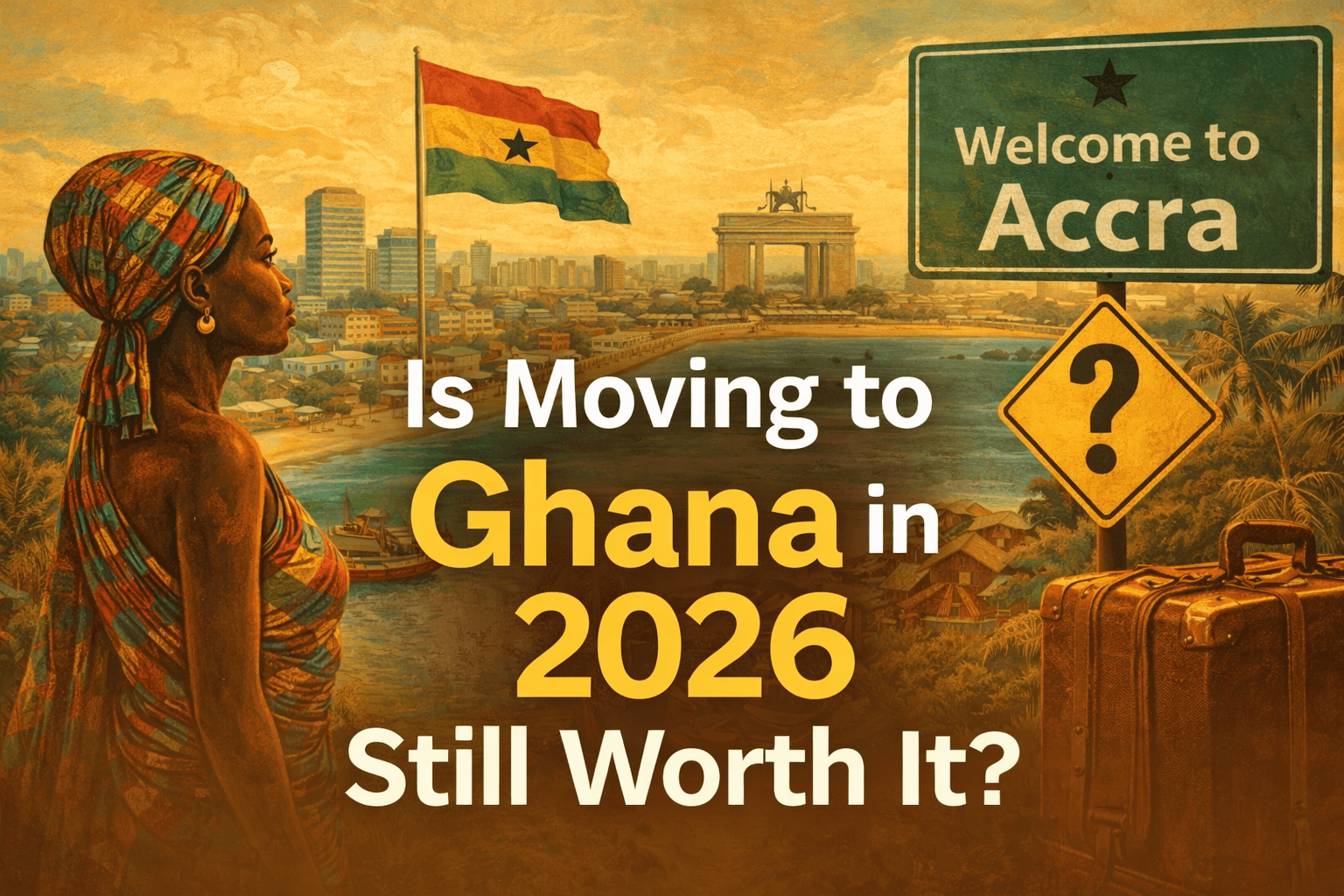
For a fuller view of costs and whether moving to Ghana in 2026 is still worth it, read our honest breakdown. For rent and neighbourhoods, see Rent in Accra.
What's something nobody told you before you moved? Share below (anonymously if you like) so others can learn.
SEO (for editors)
- Meta title: What Nobody Tells You About Moving to Ghana (48 chars)
- Meta description: (use frontmatter description above; 155 char max)
- URL slug: what-nobody-tells-you-moving-to-ghana
- Excerpt: The unspoken realities of relocating to Ghana. Bureaucracy, power, identity, cost, and what you only learn after you land.
- Tags: relocating to Ghana, moving to Ghana 2026, Ghana expat, Accra cost of living, diaspora
- Image alt: Unspoken realities of moving to Ghana: street scene or document/bureaucracy theme.
Get More Honest Insights
Weekly stories and practical advice about life in Ghana, delivered to your inbox.
Subscribe to Newsletter